
Community
Q&A
Questions neighbours, councillors and reporters have asked about Bedrock’s vision for the site: clean energy storage for Ontario’s energy transition, and a Canadian home for Canada’s most important data. Where we do not know yet, it says so.

Questions and answers
This is an introduction to a direction, not a finished proposal. Details will be developed with the community and the municipality, and this page will be updated as they are.
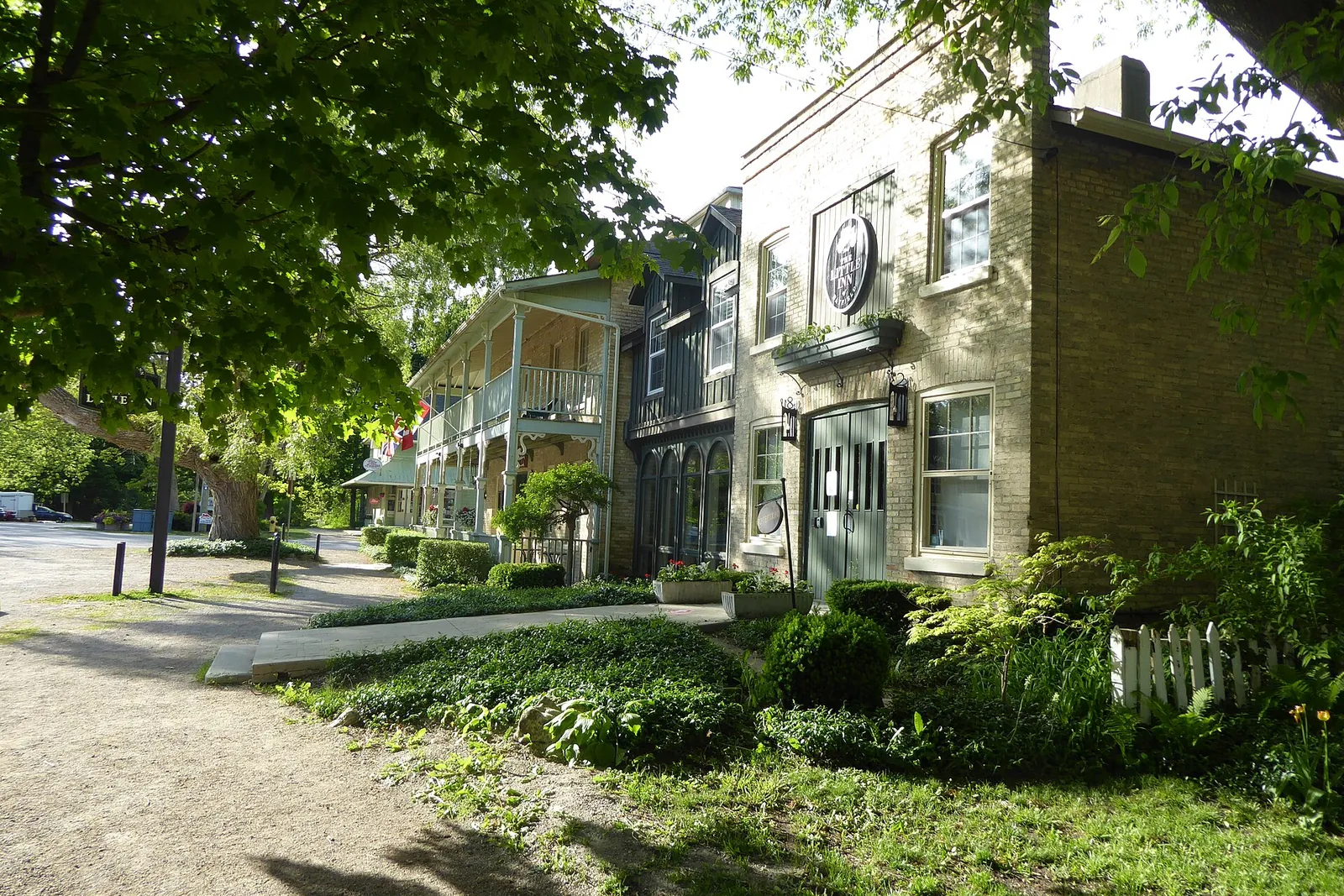
Photo: WabbitWanderer, CC BY-SA 2.0, via Wikimedia Commons
What is Bedrock?
Bedrock is an EnergyTech startup focused on the clean energy transition and AI data sovereignty for Canada. We develop sites in Ontario that already hold the geology and the grid connection needed to store clean energy and deliver it back as firm, reliable power.
We are a developer. We bring together the land, the power and the connection, and we work with partners for everything else.
What does “Store. Restore. Respect.” mean?
Store. Compressed air, and where the grid needs it, natural gas, held in sealed rock formations deep underground that have stored gas safely for millions of years.
Restore. Restoring the environment: pushing the green energy transition forward, returning the land we use to the state we found it in, and leaving the places we work better than we found them.
Respect. For the environment, for the community that hosts us, and for the partners and collaborators we build with.
What is the vision for the Bayfield site?
A site that stores clean energy, supplies firm power in every hour of the year, and helps Canada keep its most sensitive data and computing under Canadian control. The approach is being developed in phases and in consultation, and nothing about it is settled yet. This page describes the direction, not a finished plan.
How is this different from what was presented before?
The earlier proposal was about storage on its own. The vision now is broader: storage remains at the heart of it, and it sits within a wider role for the site in Ontario’s energy transition and in Canada’s data sovereignty. We are introducing that direction early, before details are fixed, so the community hears it from us first.
Why does data sovereignty matter here?
Canada is deciding where the computing behind its public services, its research and its economy will live, and whether it will be under Canadian control. That computing needs firm, clean electricity. Sites that can store and supply their own power are rare, and Bluewater holds one of the few places in the country where the geology and the transmission already exist together.
What does the energy transition have to do with it?
Ontario is adding wind, solar and nuclear, and all of them produce power on their own schedule rather than the grid’s. Storage is what turns that into electricity people can count on at six o’clock on a January evening. Bedrock’s reservoirs can hold that energy for hours at a time and return it when it is needed.
Is there a risk to drinking water or private wells?
No. The reservoirs lie more than 500 metres below the surface, far below the aquifers that supply local wells, and they are sealed by the same rock that held natural gas in place for millions of years. Every well that reaches them is built with multiple cemented casing strings and is licensed and inspected under Ontario’s well regime.
We are comfortable having that checked by others. Bedrock has offered an independent review of the reservoirs by a reviewer the municipality helps choose, published in full, together with free baseline testing of neighbouring wells.
Is compressed air storage safe?
Yes. Compressed air has been stored underground since 1978 at Huntorf in Germany and since 1991 at McIntosh in Alabama, and both plants are still operating. The air is stored in rock, not in tanks, and the reservoirs are monitored continuously through dedicated observation wells.
What happens to farmland?
Land that is not built on stays farmed. Land taken out of production would be returned to agriculture at the end of the project’s life, and Bedrock intends that obligation to be written into a municipal agreement and secured, rather than left as a promise.
Can Bedrock require a landowner to take part?
No, and Bedrock will not try. Participation is by agreement. A neighbour who does not want to be involved does not have to be.
How noisy would it be?
Any facility has to meet Ontario’s noise limits at the nearest homes before it can be approved, and that is the standard Bedrock designs to. Sound modelling is part of the environmental assessment and will be shared when it is complete.
What would it look like from the road?
Low industrial buildings and an electrical yard, set back from the road with berms and planting. There is no above-ground air storage: the air is underground. Lighting would follow dark-sky standards so it does not carry across the fields at night.
Does the project need a new transmission line?
No. Two 500 kV circuits already cross the site. That is why this location was chosen, and it means no new corridor has to be acquired across neighbouring farms.
What would the community gain?
Bedrock’s intention is a long-term community benefits agreement, property taxes at the industrial rate, a road users agreement covering the routes construction would use, and local employment during construction and operation. The specific terms are to be worked out with the municipality, not announced in advance of that conversation.
Are First Nations part of this?
Engagement with First Nations is part of the environmental assessment process, and Bedrock is open to partnership. Their positions are theirs to state, not ours.
What approvals would be needed?
A connection assessment with the IESO and Hydro One, provincial environmental approval, well licensing, confirmation of the regulatory pathway for air storage in these reservoirs, zoning and site plan approval from Bluewater, and municipal support. Each of these is a public process with its own opportunity to comment.
Where can I see more detail?
Technical detail is documented for regulators and reviewers and changes as the design matures. If you want that level of detail, as a resident, a councillor or a reporter, ask us and we will arrange it.
Who do I talk to?
Questions asked publicly get answered publicly. Use the contact form and say who you are, and it will reach the right person.

Get in touch
Talk to Bedrock
Landowner, municipality, supplier or press: tell us who you are and we'll route you to the right person.
Contact us